
Read Norton County Property Tax Records by Source
Three Norton County offices divide the work. The County Appraiser sets value, the County Clerk administers the tax roll and levies, and the Treasurer collects and distributes the tax, so a careful reading of property records matches each field to the office that produced it.
| Field | What It Shows | Where |
|---|---|---|
| Appraised value | Annual value as of January 1 | Appraiser |
| Property class | Residential, commercial, agricultural, or other class | Appraiser |
| Assessed value | Taxable share after the applicable ratio | Appraiser and roll |
| Levy and district | Rates allocated across taxing units | County Clerk |
| Bill and payment | Amount billed and collection status | Treasurer |
Kansas classification rules treat property differently by use. Residential parcels are assessed at 11.5 percent of appraised value. Commercial and industrial property carries 25 percent. Agricultural land sits at 30 percent of its use value. Those percentages differ. A Norton County tax bill is not a statement of sale price.
January 1 Fixes Norton's Valuation Snapshot
In Norton County, every parcel gets its value fixed on January 1. That single date sets the tax-year snapshot. A deed recorded in March, a house finished in summer, or a market shift in fall simply waits for the next cycle. The Appraiser leans on sales, construction costs, rents, and other market data to set values. Farmland works differently. Norton County measures agricultural land by productivity formulas, not the usual willing-buyer, willing-seller approach. The Appraiser's own page is where valuation duties and trend notices officially live.
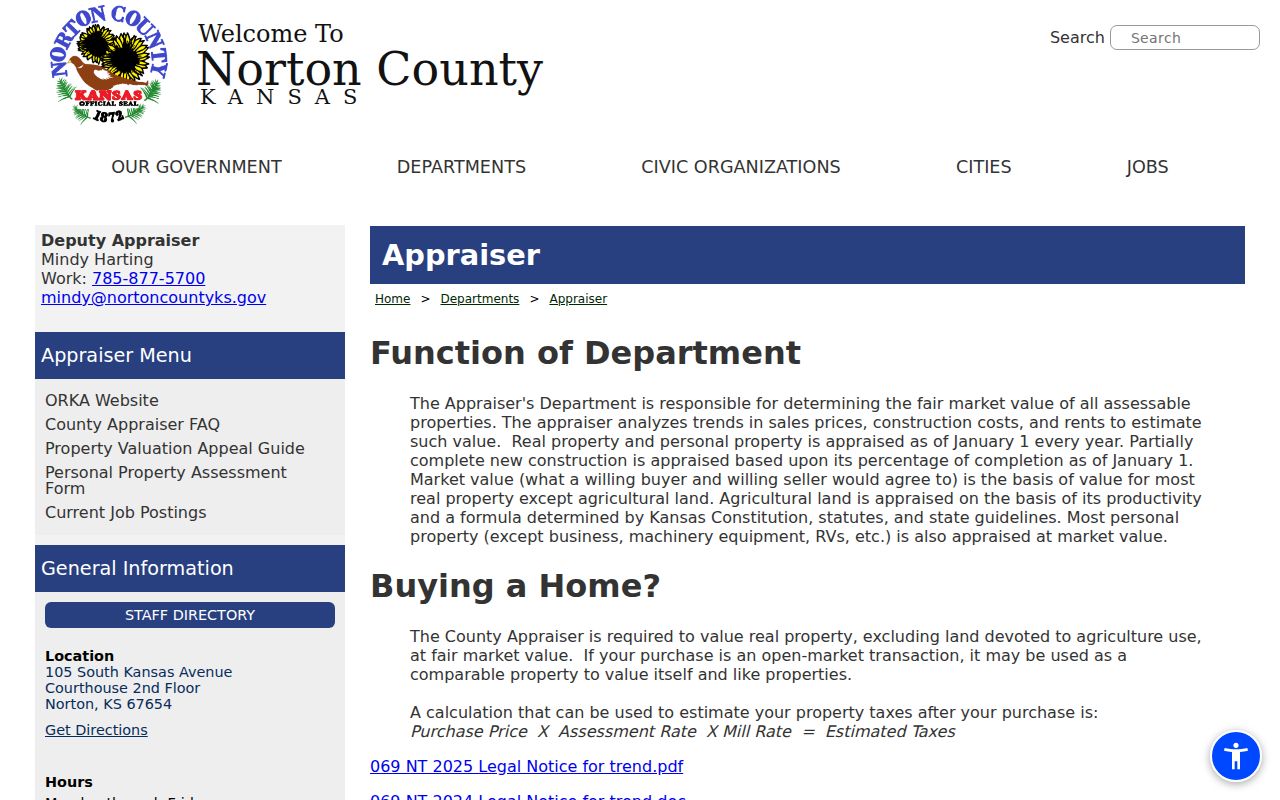
Compare the access date and assessment year before treating any displayed figure as current.
The 2025 Trend Notice Explains Why Values Move
Norton's 2025 trend notice explains why values move. Broad inflation can lift residential, commercial, and vacant-lot values at once. A single parcel can shift for other reasons. Corrected descriptions, physical changes, and comparable sales all matter. Farmland moves differently. Agricultural changes instead run through cropping practices, commodity prices, and production costs. That beats assuming every increase signals a sale. The county page links notices covering 2023 through 2026, so match the notice to the year actually under review. Ask for the property's data sheet when a specific change looks wrong.
Norton Has No Verified Free County Tax-Bill Search
The official county site has no free bill-search tool. The Treasurer still accepts payments through documented office channels. Those include mail and the courthouse west-side drop box. A state route exists too. The Kansas property-tax payment entry lets taxpayers pay at the state level. It is a payment path, not balance proof for Norton County. When the online route falls short, contact the Treasurer. Include the taxpayer name, property description or parcel identifier, and tax year.
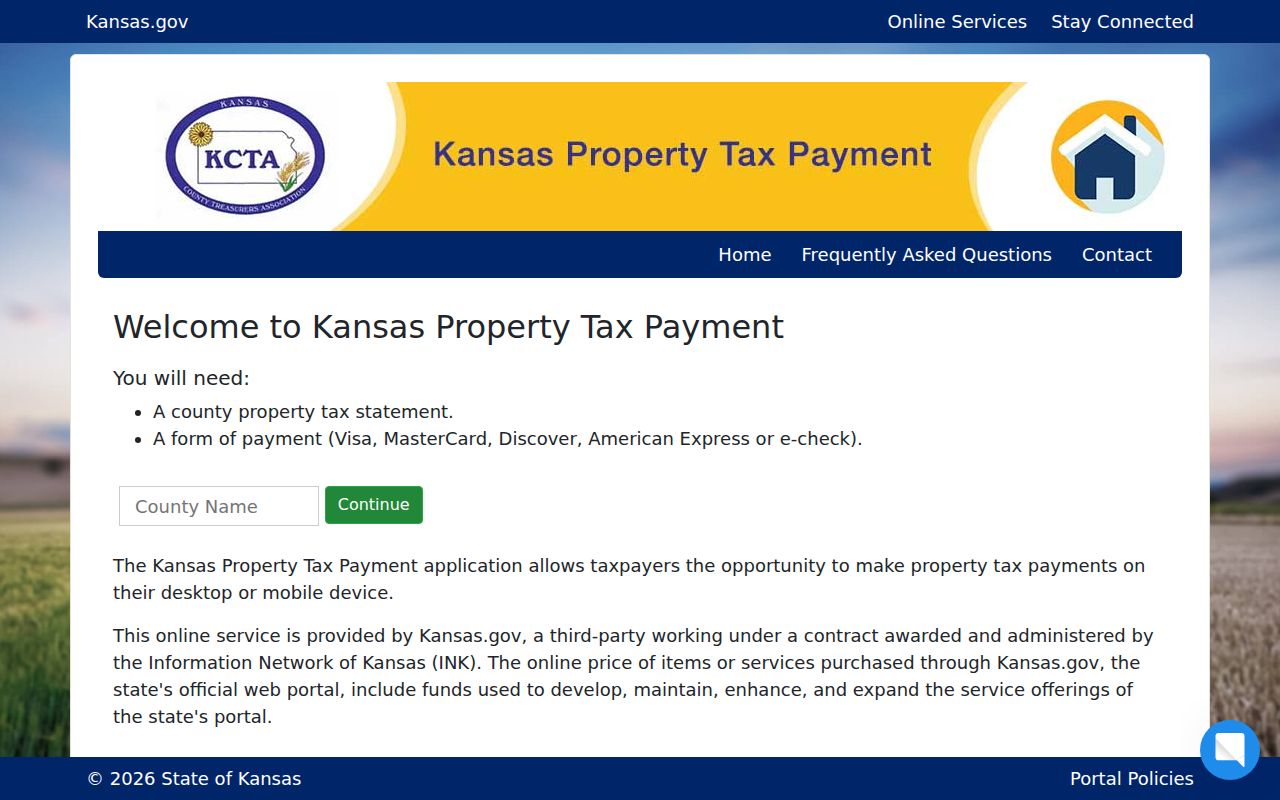
Confirm the county, parcel, year, and amount before submitting funds.
Follow a Norton County Tax Bill Across Three Offices
Anchor the search first. A Norton County tax lookup needs a stable parcel identifier and a named tax year, never an owner mailing address in place of the situs or legal description.
- Use ORKA or the Appraiser to identify the parcel and assessment-year value.
- Ask the Clerk which levies and districts were applied to the tax roll.
- Ask the Treasurer for the bill, installments, payment status, and prior year requested.
- For a delinquency or sale question, verify the public notice and resulting court or deed record.
- Assessed value
- The portion to which levies apply after classification.
- Mill levy
- A rate expressed per thousand dollars of assessed value.
- Homestead refund
- A state-administered refund program, not a county parcel exemption search.
- Tax lien
- A statutory claim connected to unpaid tax, requiring current verification.
The Clerk Connects Levies to the Tax Roll
The Norton County Clerk calculates levies in October. The office also runs the tax roll, statements, and district information. Taxing-unit questions belong here. The Treasurer is the collection side. The Appraiser handles valuation. The Clerk's FAQ adds one caution: homestead returns no longer run through that office. A state refund is not a searchable local exemption line.
Sale Notices Are Leads, Not Completed Tax Transfers
Public sale notices can surface a legal description, case caption, sale date, and sheriff procedure. They work well as leads for distressed-property research. Publication alone proves nothing. A notice does not confirm that a sale happened. It does not show approval. It does not prove a new deed was produced. Cross-check the Norton District Court file, the Treasurer record, and the Register of Deeds. Do this before treating anything as final. One 2024 local notice mixed Howard's Addition land with a rural section description. That blend is a reminder. Treat each tract as its own record.
Note: Verify suspicious payment messages through official county pages. Court and tax branding can be imitated.
Build Evidence Before the Informal Meeting
An appeal targets the value and classification on record for the year at issue, not general unhappiness with the bill. Ask for the Appraiser's property record and data first. Then compare the facts. Physical changes, legal description, class, and genuinely comparable sales all deserve side-by-side review. Photos help. So do measurements and repair evidence. A clear explanation beats a bare number. K.S.A. 79-1448 sets out the informal appeal route and evidence rights, and it bars raising the valuation at the informal meeting itself. Further review follows the Kansas tax-appeal process, and the Kansas Board of Tax Appeals forms page provides the state forms route.
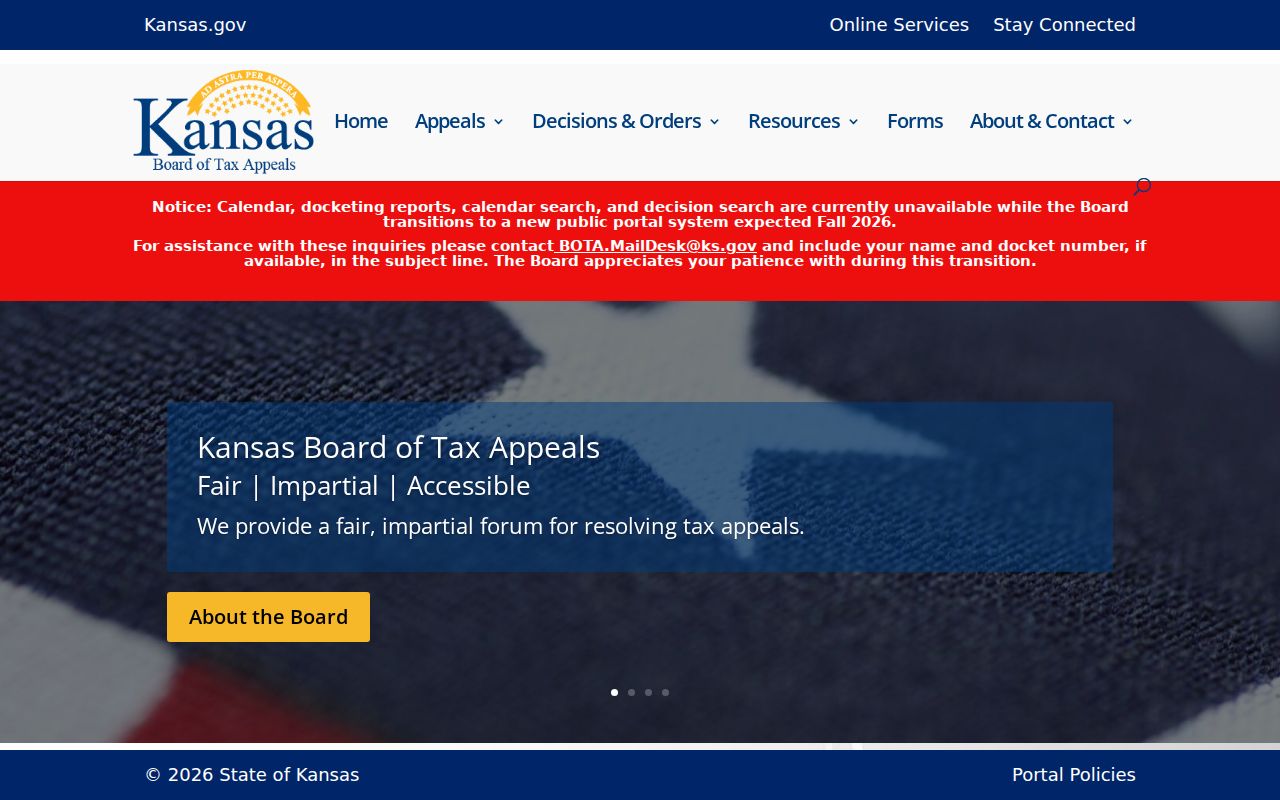
Pick the form that matches the appeal stage. Verify the filing instructions rather than assuming the state page replaces the initial county meeting.
Separate Tax Delinquency from a Completed Sale
An unpaid amount, a published notice, a court case, a sheriff's sale, and a recorded deed are separate stages. Search the Treasurer's payment record first. Then use a public notice or the District Court file to understand the legal process. A notice may give the owner, legal description, case number, sale terms, and commonly known address. It is not proof that a sale occurred. Nor does it prove a deed was recorded.
A 2024 local sheriff-sale notice and a 2026 Hillside Addition notice serve as useful examples. Each pairs location clues with a controlling legal description. When a tax or foreclosure question turns on the outcome, request the court docket and the orders in it. Then ask the Register of Deeds for the resulting instrument. Keep all dates in sequence.
A federal lien or federal bankruptcy adds another system. PACER and the District of Kansas maintain federal case routes, while Norton District Court covers local property litigation in the 17th Judicial District. Use federal sources only for federal matters. They do not replace county tax and deed records.
Note: Verify any delinquent status directly with the Treasurer before money, title, or purchase decisions are made.
Compare Norton Values Without Mixing Tax Years
Start with the appraised value, property class, assessment ratio, assessed value, and levy for the same year. Match the years. Mixing years invites error. Then note physical changes, corrected descriptions, or classification differences. Comparing one year's market estimate with another year's tax bill creates a false trend, because both the valuation base and the levies may have shifted.
The Kansas Department of Revenue publishes a county value-and-tax summary for broad context, yet a countywide total cannot explain an individual parcel. The Norton trend notice describes categories of change. It does not promise every property followed the pattern. For parcel-level evidence, use the Appraiser's record and informal-review materials.
Sale price belongs to the deed and transfer context, not automatically to the public tax card. Kansas Sales Validation Questionnaires have restricted access. A missing questionnaire is not missing tax data. Use a recorded consideration statement only when the document actually provides it, and never infer market value from an advertised sheriff-sale amount.
A sound comparison table labels its source, assessment date, tax year, class, appraised value, assessed value, levy, billed amount, payment date, and access date. That discipline pays off. It makes Norton County property tax records useful for appeal preparation and purchase diligence without claiming one number answers every valuation question.
Contest a Norton County Assessment on Time
K.S.A. 79-1448 sets the deadline. That window lasts 30 days. It runs from mailing of the valuation notice to request an informal meeting. Inspection rights are broad. The owner may inspect the information and comparable-property data relied upon. Photographs, measurements, repair evidence, sales comparisons, classification facts, or agricultural-use information may be presented to address the actual valuation issue, and a further state appeal follows the prescribed Board of Tax Appeals route.
For current forms, consult the official Kansas Board of Tax Appeals forms index, which is not a substitute for filing first with the proper local office.
The forms screen helps identify the state route after the local review stage.
Appeal window. Request the informal meeting within 30 days after the valuation notice is mailed. Verify delivery and filing instructions with the Norton County Appraiser immediately.